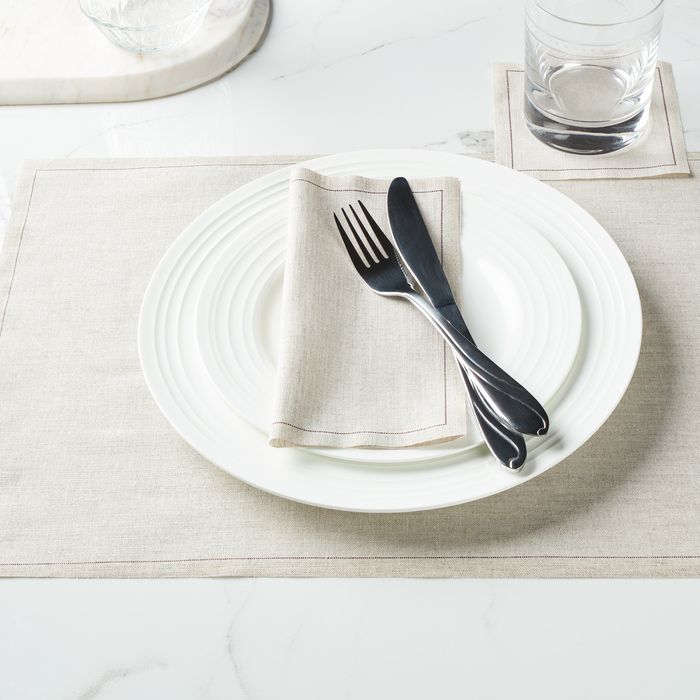
A memorable party is not a matter of abundance. It is a matter of rhythm. The best evenings move like a piece of music — a light, open beginning, a fuller and more considered middle, a soft and lingering close — and the host who plans for that arc, rather than for a single grand tableau, is the one whose guests leave feeling looked after. The table is where that rhythm becomes visible. Long before the first plate is set down, the way a room is dressed tells everyone how the night is meant to unfold. So the planner's real craft is not decoration; it is pacing, made physical in cloth, colour, and the small details a guest can hold.
Think of the evening in three movements. The aperitif is the overture — people on their feet, a glass in one hand, moving between conversations. Dinner is the heart of the night, seated and unhurried, where the table does its most deliberate work. Then comes the after: coffee, a final pour, the loosening of the room as the formality falls away. Each movement asks something different of the setting, and a planner who honours those differences, rather than dressing every surface the same way, gives the night its shape.
A format for each moment
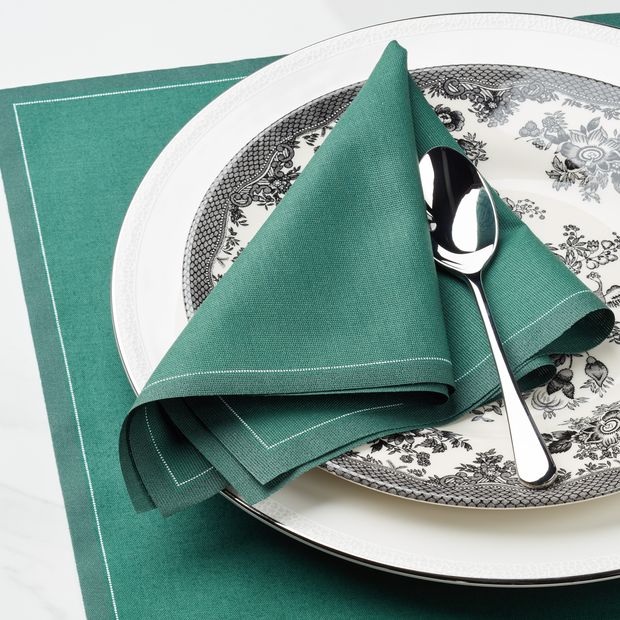
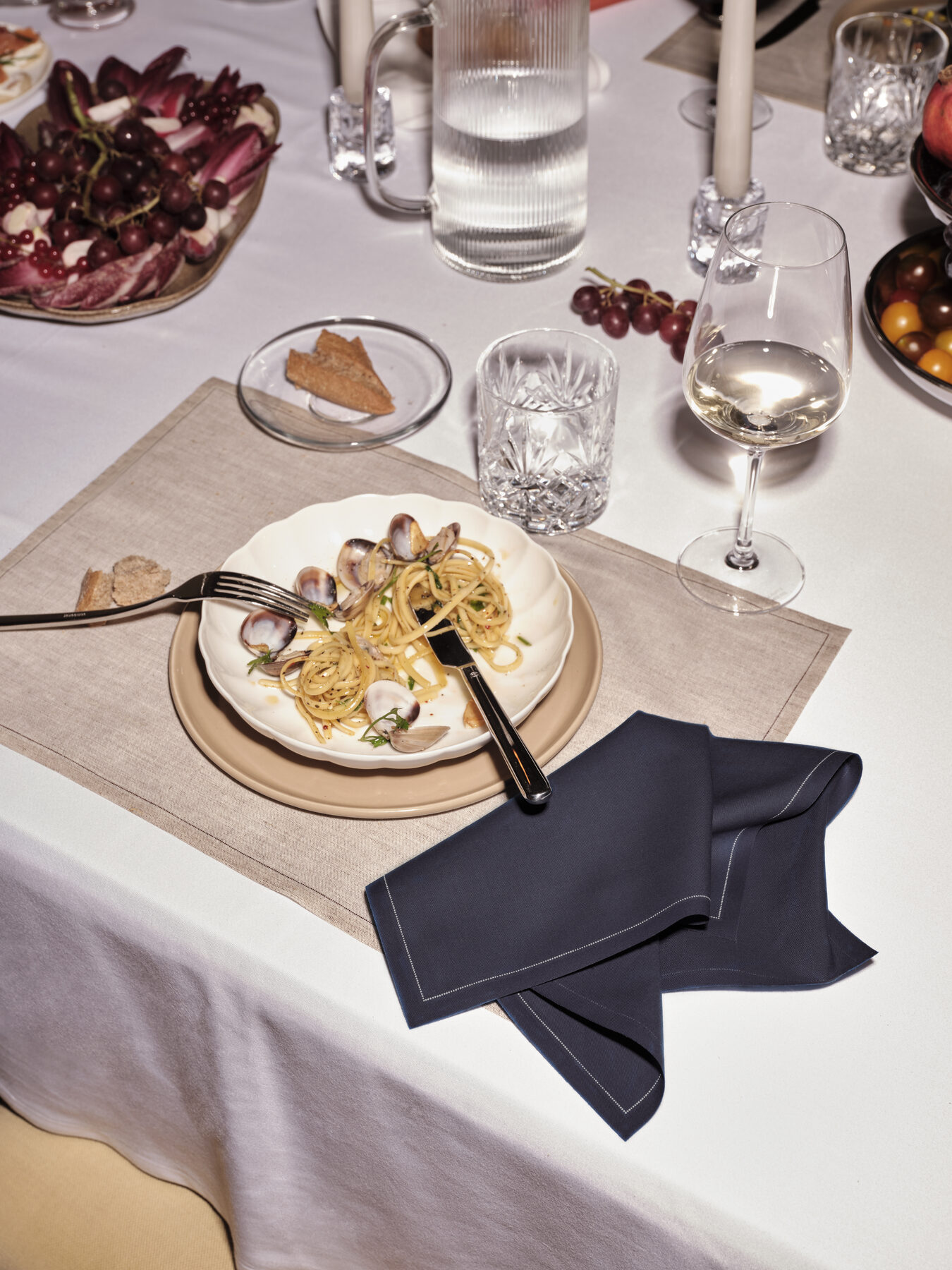
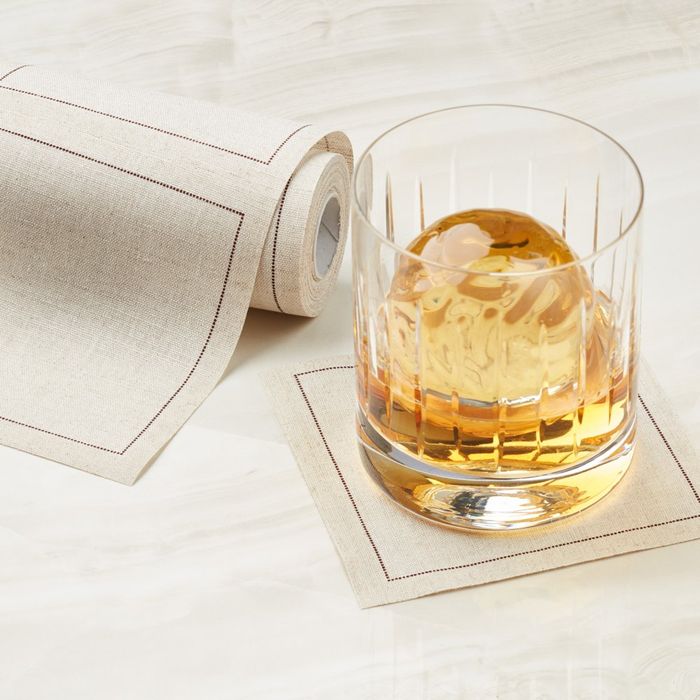
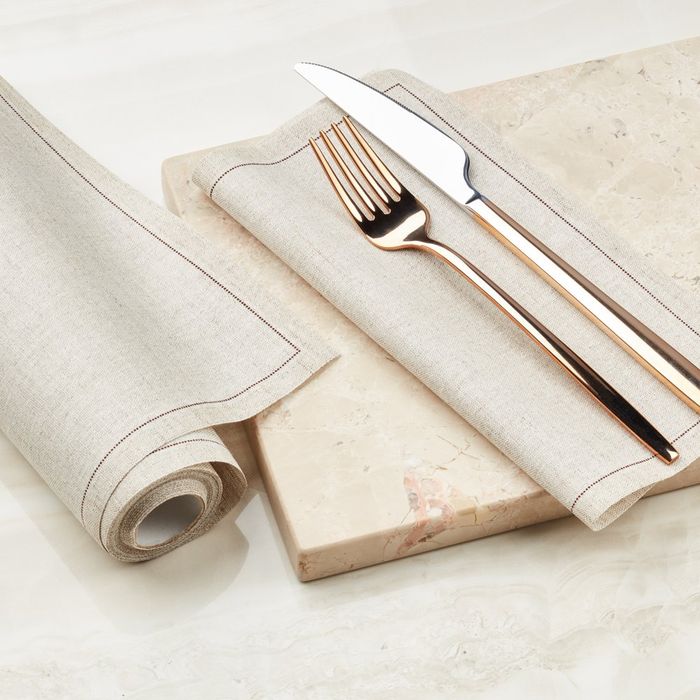
This is where the napkin earns its keep. It is easy to treat it as a single object bought once in bulk, but the format should follow the moment. For the standing aperitif, the cocktail napkin — a neat 4.3 inches — is exactly right: small enough to tuck beneath a glass or a canapé, generous enough to feel like cloth rather than an afterthought. At the seated table, the luncheon napkin at 8 inches suits a lighter lunch or a relaxed supper, while the dinner napkin at 12 inches unfolds across the lap with the presence a proper dinner deserves. Matching the size to the service is the quiet difference between a table that feels arranged and one that feels improvised.
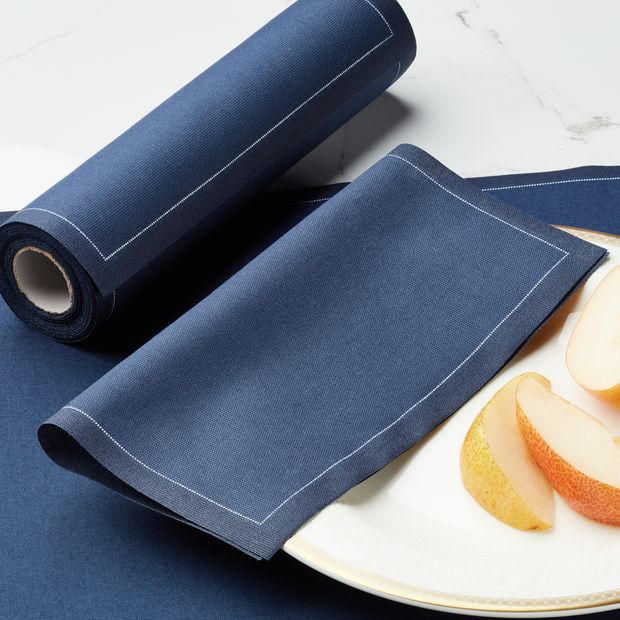
The pleasure of planning this way is that the pieces are all of a family. A woven cotton napkin, supplied on a roll and torn a single clean square at a time, carries the same hand and the same character whether it is a small cocktail square by the bar or a full dinner fold at the table. The guest reads continuity without ever naming it — the sense that one considered eye dressed the whole evening.
Plan the table the way you would plan the evening — in moments, not in a single grand gesture.
On pacing the perfect party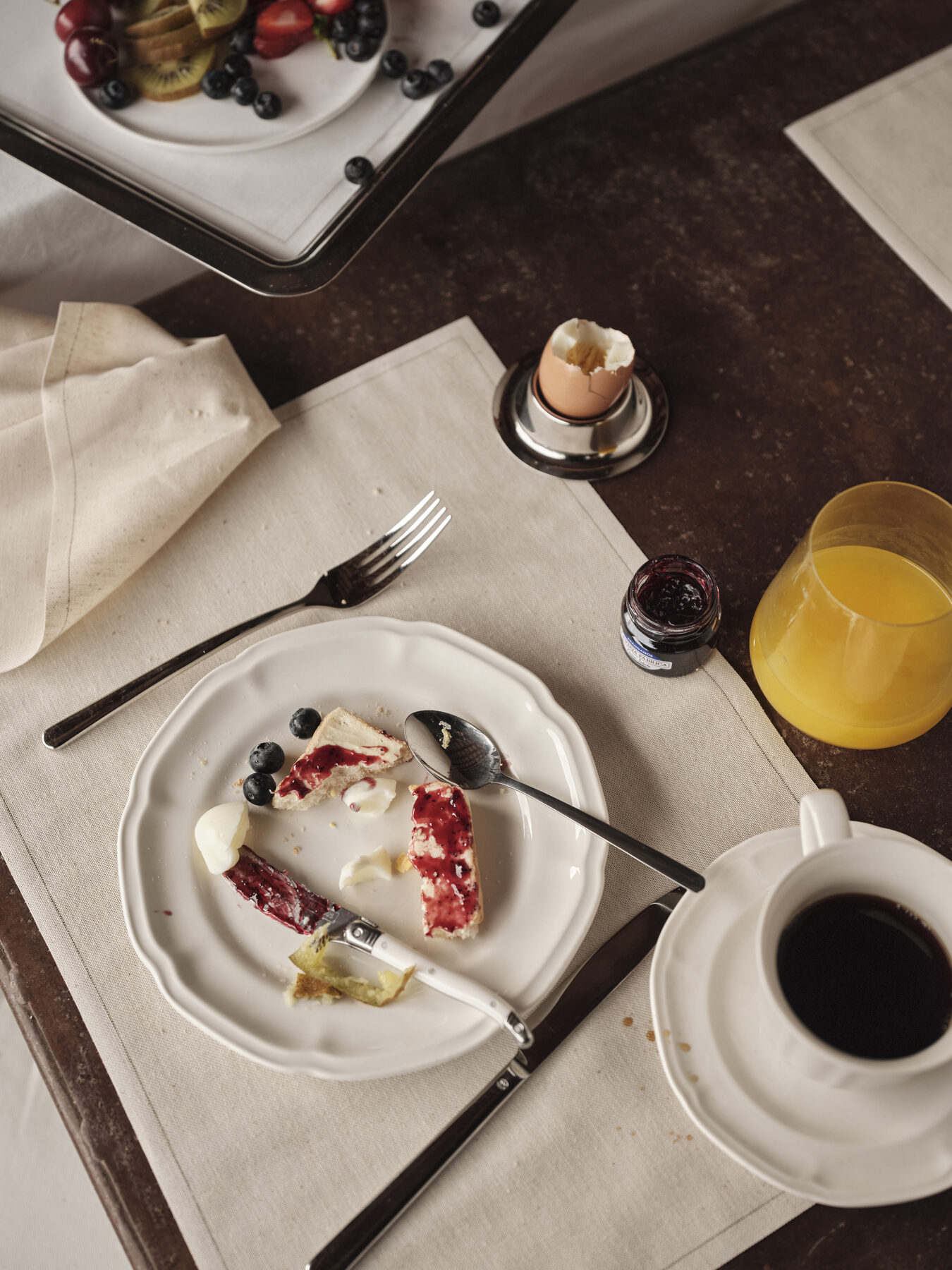
Colour as the quiet thread
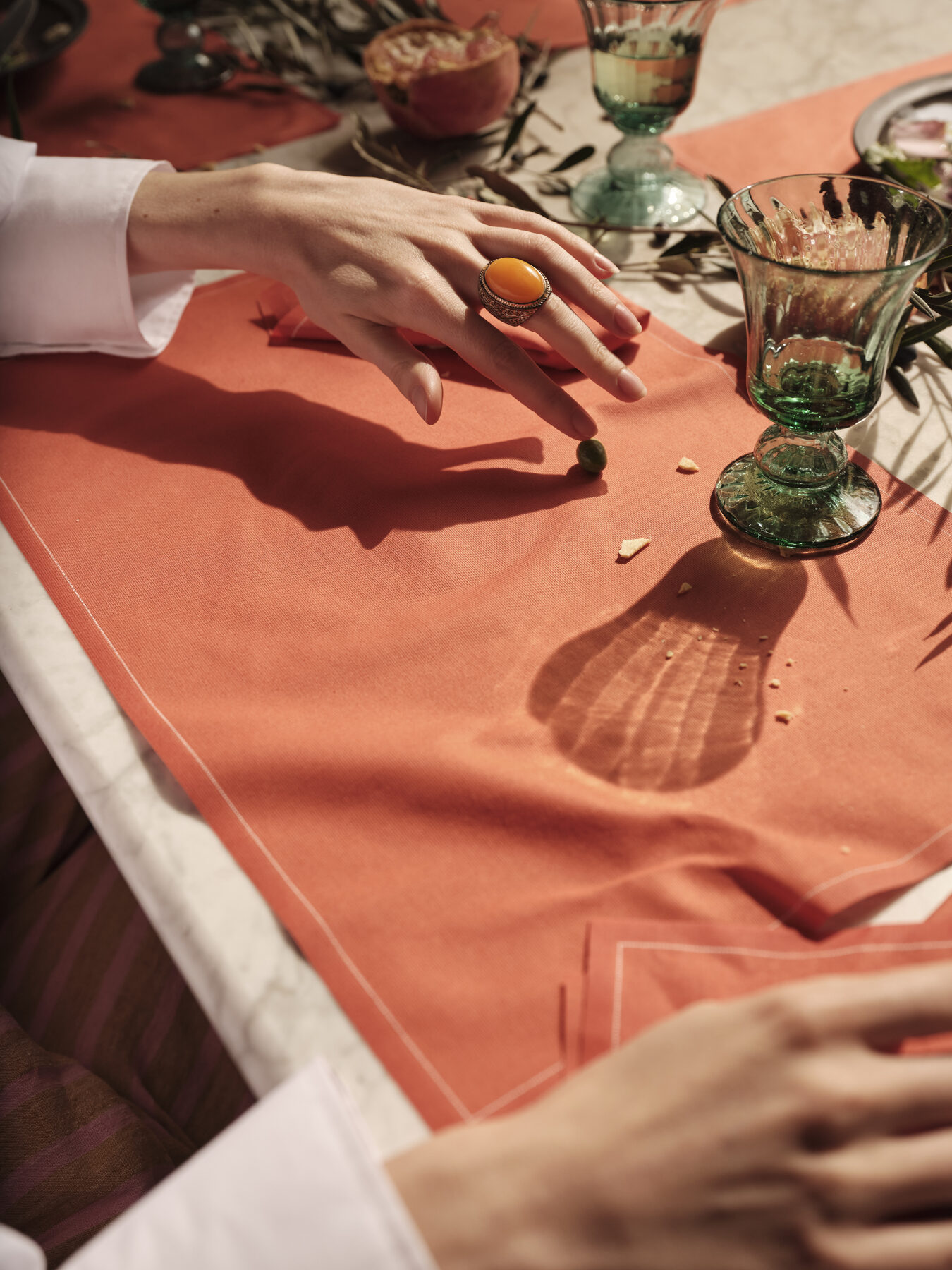
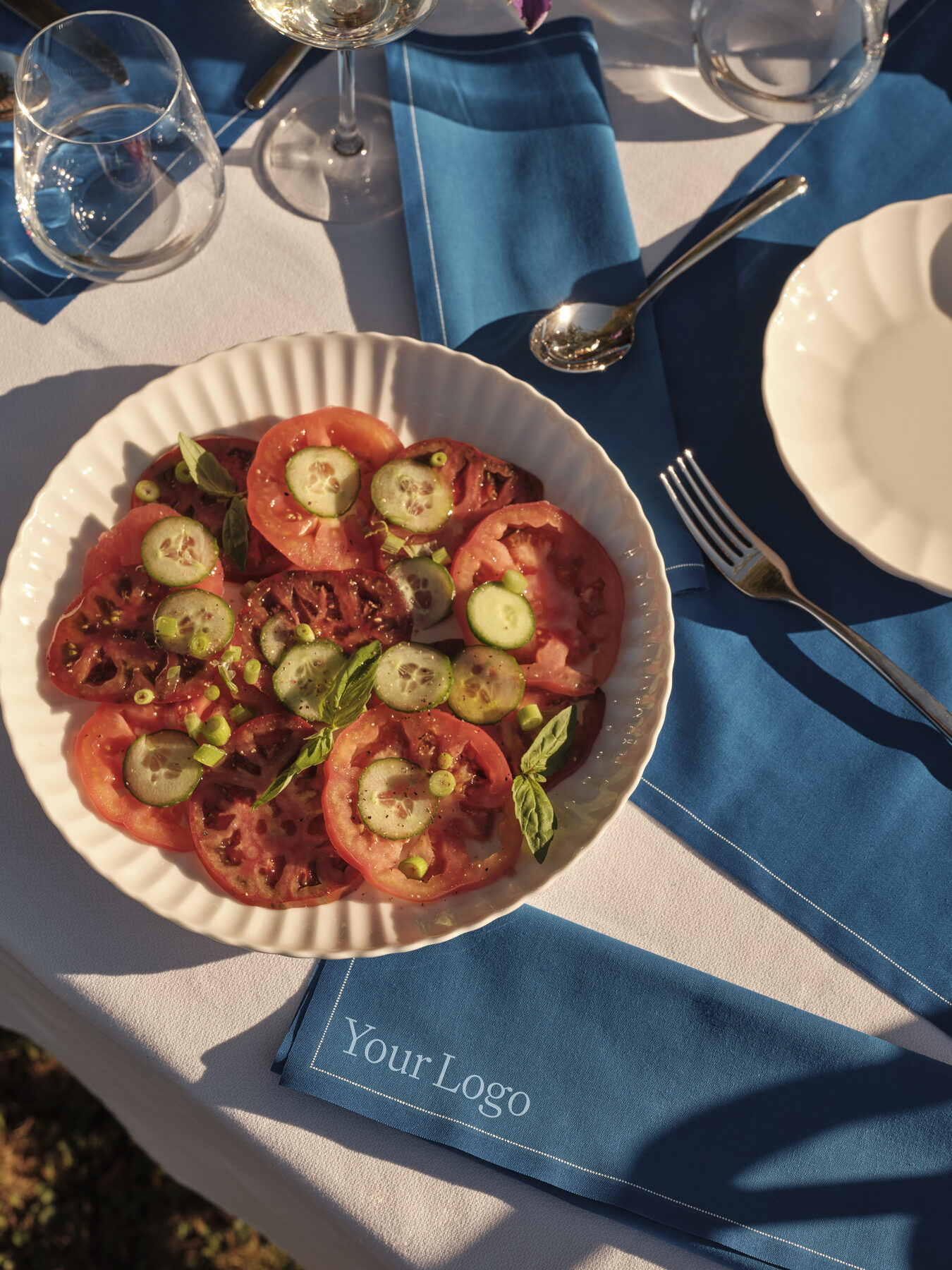
If format sets the rhythm, colour holds the room together. The temptation, faced with a beautiful table, is to reach for many hues at once. The more assured move is the opposite: choose one colour and let it run, quietly, through every part of the evening. A single tone — a petrol blue, a soft eucalyptus, a warm sand — repeated from the aperitif napkin to the dinner fold becomes the thread that ties three movements into one night. It is the least expensive and most elegant tool a planner has, because it works by restraint rather than by addition.
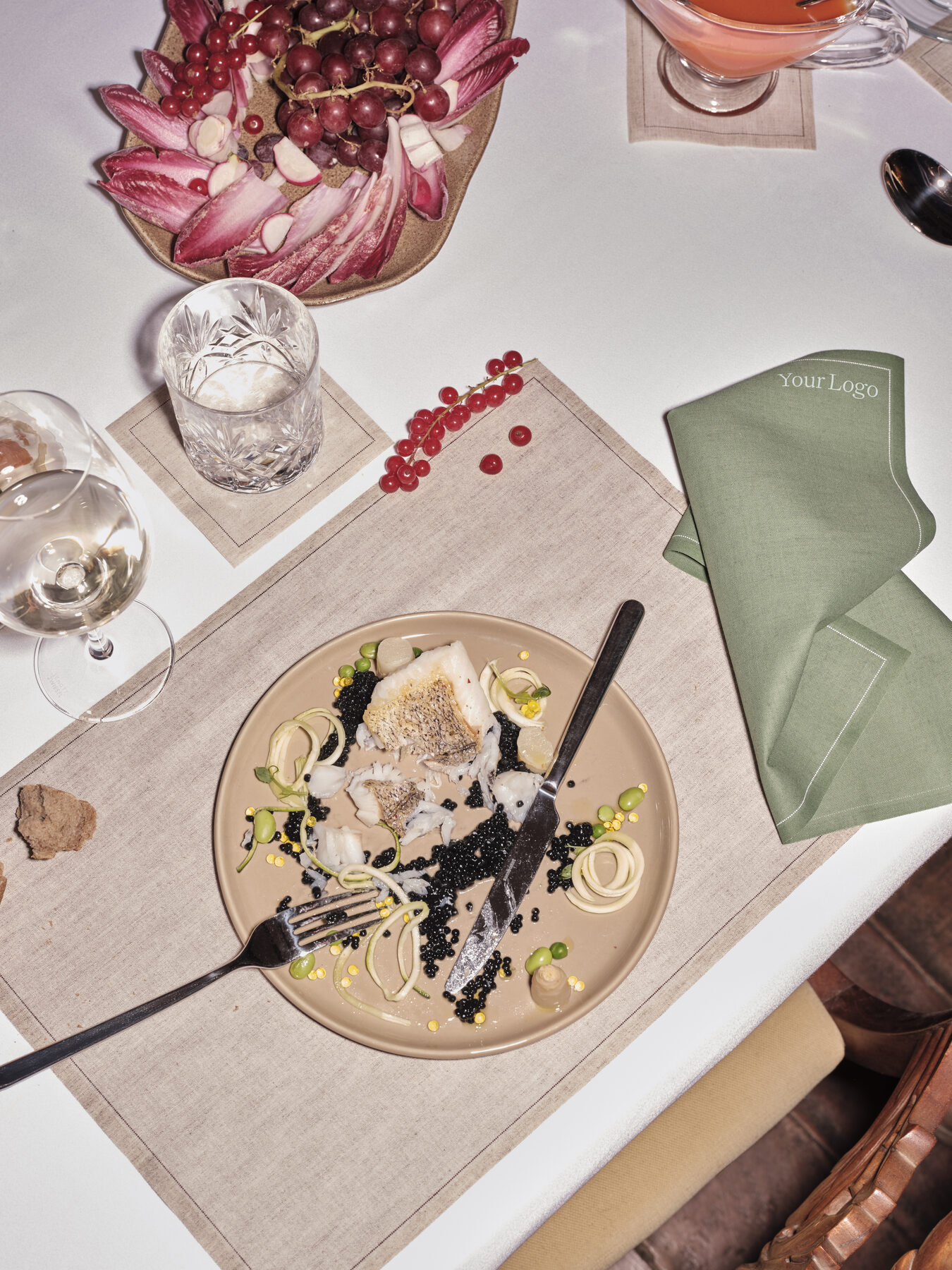
A chosen colour also does the work of coordination for you. Set against white china and clear glass, a considered napkin tone is what a guest's eye settles on, and what a photograph remembers. It need not match the flowers or the room precisely; it needs only to belong to them. One colour, carried with confidence, reads as intention — and intention is the whole impression a good host is trying to leave.
Quantity, without fear
The part that keeps planners awake is the maths of how many. Here the woven cotton napkin is unusually forgiving, because it can be used two ways from the same box. Dress the standing hour and the busy service as single-use, and it behaves like the tidiest disposable stock imaginable — torn from the roll, set down, and let go. For the calmer, seated heart of the evening, the same cotton can be washed and returned to service up to six times, which softens both the budget and the count. Plan a comfortable margin, and you are never short; whatever is unused is simply held for the following occasion rather than wasted.
That flexibility removes the anxiety from the guest list. You are not committing to a laundry contract for a party, nor resigning yourself to paper that undoes the whole effort. You are choosing, moment by moment, whether a given service wants the ease of single use or the economy of a cloth that comes back — washable up to six times or disposable, as you wish.
And there is the close that a thoughtful host will appreciate most. When the night is over and the table is cleared, a cotton napkin does not become a bin bag of plastic-lined tissue. It is 100% cotton, woven in Barcelona, biodegradable and compostable at the end of its life. The evening ends the way it should — lightly, leaving the room, and the guests, better than it found them, and taking nothing lasting from the world beyond the pleasure of the night itself.